
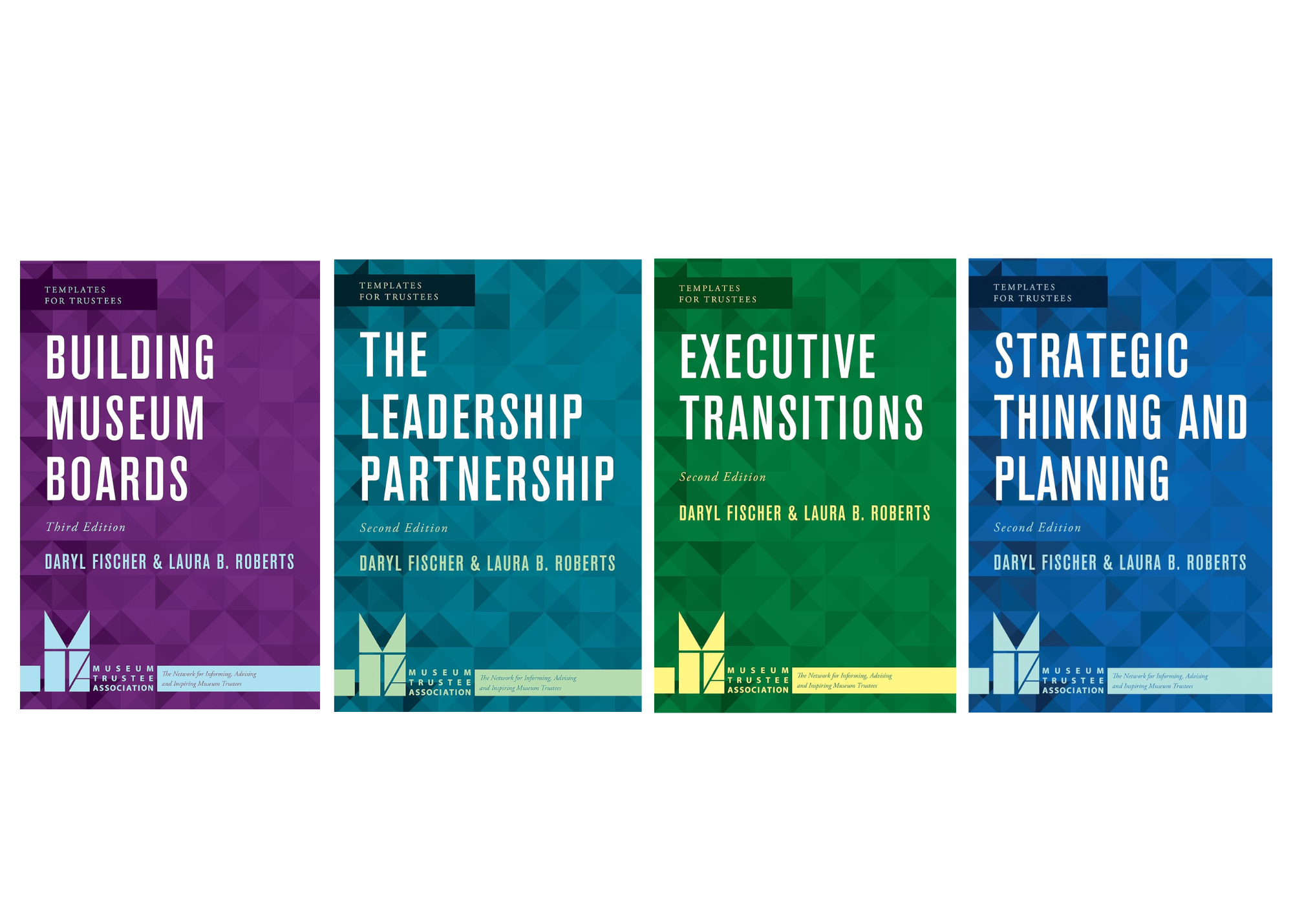
Tools for Trustees | 4 Book Bundle

$240.00

​Templates for Trustees is a four-part series designed by the Museum Trustee Association to focus attention on key processes and tasks of governance. The books and web-based customizable templates include tools that collect information and then guide the board in using that information to organize their thoughts, identify their priorities, and plan their actions. All templates in the series have two parts: a printed guide and an online website. Purchasers of the books have access to the ongoing assistance of MTA staff.

The included titles are:

  • ​Strategic Thinking and Planning models the kind of thinking that is required not only to create a strategic plan that is tailored to each institution, but also to stay focused on the strategic aspects of governance while implementing that plan. Planning teams are introduced to exercises and tools that will help them focus on what’s most important to the future of their institution. In using the templates, they will adopt new ways of analyzing information and thinking about their museum’s mission that will make them more effective leaders.

  • Executive Transitions ​ encourages board and staff members to see leadership transitions as opportunities for strategic growth. Whether a director’s departure stems from a carefully crafted succession plan or is a completely unanticipated event, the text and accompanying templates will be useful to museums of all types and sizes. This book guides the search committee through each step of the executive search process: announcing the previous director’s departure and considering interim leadership options, conducting an institutional audit that will serve as the basis for identifying professional skills and personal qualities needed in the new leader, writing and posting the position announcement, screening initial candidates and interviewing finalists, conducting reference and background checks, and extending an offer. And because it is the board’s responsibility to not only hire the new director but to facilitate his or her success, the final chapter focuses on the all-important onboarding of the new leader and the first transition year.  

  • The Leadership Partnership  explores and supports the critical partnership between the executive director and the board members.  It helps leadership unite in the development of strategies and tactics that are appropriate for the individual institution. A series of online surveys allows board members to look at their own performance, that of the board as a whole and that of the executive director across ten critical areas of museum management: mission, vision and strategy; professional development, board operations, individual relationships, oversight, finances and fundraising, collections, facilities, and public engagement. The final tool guides users into turning the findings from the surveys into a leadership plan, to be presented and discussed with the board. 

  • Building Museum Boards​  examines key practices in nonprofit governance including diversifying board composition, improving board effectiveness, and strengthening the governance committee. The book and web app guides the governance committee through every step of the nomination and board-building process including identifying and cultivating board prospects; crafting job descriptions for members, officers, and committees; ensuring compliance with conflict-of-interest standards; and orienting and activating new board members. The web app accompanies the book, and it is where you will find surveys and other useful tools to implement the key governance processes. Additionally, there is an interactive calendar to your tasks on time, and your board continually evolving.  

​Templates for Trustees is a four-part series designed by the Museum Trustee Association to focus attention on key processes and tasks of governance. The books and web-based customizable templates include tools that collect information and then guide the board in using that information to organize their thoughts, identify their priorities, and plan their actions. All templates in the series have two parts: a printed guide and an online website. Purchasers of the books have access to the ongoing assistance of MTA staff.

The included titles are:

  • ​Strategic Thinking and Planning models the kind of thinking that is required not only to create a strategic plan that is tailored to each institution, but also to stay focused on the strategic aspects of governance while implementing that plan. Planning teams are introduced to exercises and tools that will help them focus on what’s most important to the future of their institution. In using the templates, they will adopt new ways of analyzing information and thinking about their museum’s mission that will make them more effective leaders.

  • Executive Transitions ​ encourages board and staff members to see leadership transitions as opportunities for strategic growth. Whether a director’s departure stems from a carefully crafted succession plan or is a completely unanticipated event, the text and accompanying templates will be useful to museums of all types and sizes. This book guides the search committee through each step of the executive search process: announcing the previous director’s departure and considering interim leadership options, conducting an institutional audit that will serve as the basis for identifying professional skills and personal qualities needed in the new leader, writing and posting the position announcement, screening initial candidates and interviewing finalists, conducting reference and background checks, and extending an offer. And because it is the board’s responsibility to not only hire the new director but to facilitate his or her success, the final chapter focuses on the all-important onboarding of the new leader and the first transition year.  

  • The Leadership Partnership  explores and supports the critical partnership between the executive director and the board members.  It helps leadership unite in the development of strategies and tactics that are appropriate for the individual institution. A series of online surveys allows board members to look at their own performance, that of the board as a whole and that of the executive director across ten critical areas of museum management: mission, vision and strategy; professional development, board operations, individual relationships, oversight, finances and fundraising, collections, facilities, and public engagement. The final tool guides users into turning the findings from the surveys into a leadership plan, to be presented and discussed with the board. 

  • Building Museum Boards​  examines key practices in nonprofit governance including diversifying board composition, improving board effectiveness, and strengthening the governance committee. The book and web app guides the governance committee through every step of the nomination and board-building process including identifying and cultivating board prospects; crafting job descriptions for members, officers, and committees; ensuring compliance with conflict-of-interest standards; and orienting and activating new board members. The web app accompanies the book, and it is where you will find surveys and other useful tools to implement the key governance processes. Additionally, there is an interactive calendar to your tasks on time, and your board continually evolving.  

Tools for Trustees is a four-part series designed by the Museum Trustee Association to focus attention on key processes and tasks of governance. The books and web-based customizable tools include a calendar and surveys that collect information and then guide the board in using that information to organize their thoughts, identify their priorities, and plan their actions. All tools in the series have two parts: a printed guide and an online website. Purchasers of the books and web app have access to assistance from the MTA staff.